|
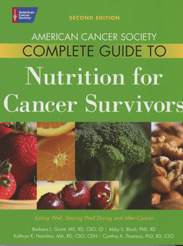
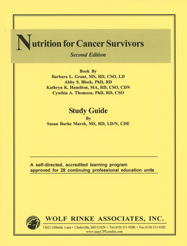
Nutrition for Cancer Survivors,
2nd Edition
Book by
Barbara L. Grant, MS, RD, CSO, LD, Abby S. Block, PhD, RD,
Kathryn K.
Hamilton, MA, RD, CSO, CDN, Cynthia A. Thomson, PhD, RD, CSO
Study
Guide by Susan Burke March, MS, RD, LD/N, CDE
| C219 |
28 CPEUs |
HARD COPY |
DISCONTINUED
|
|
Book, 352 pgs and Study Guide with 1 Reporting Form, 36 pgs.
This program
is designed to provide you with accurate and useful information that
will enable you to guide your patients and their families who are facing
the challenge of a cancer diagnosis and to help them eat healthfully
before, during and after treatment. Great resource to help you pass your Board Certification as a Specialist in Oncology Nutrition (CSO).Upon completion of this accredited,
self-directed learning program you will be able to:
- Differentiate between the Adequate Intake (AI) the Recommended
Daily Allowance (RDA) and the Daily Value (DV),
- Instruct clients how to review reliable and credible scientific
studies,
- Recommend nutritional strategies for eating healthfully while undergoing
cancer treatment,
- Apply nutritional recommendations for calories and protein needs
for weight gain, loss and maintenance during cancer treatment,
- Evaluate the benefits and detriments of vegetarian diets and list
various types of vegetarianism,
- Identify antioxidant micronutrients that play a role in immunity,
- Provide nutritional recommendations for coping with side effects
of chemotherapy and/or radiotherapy treatment including constipation,
diarrhea and dry mouth,
- Provide recommendations for physical activity during and after
cancer treatment,
- Detail how dietary supplements can interfere with cancer therapy
treatments,
- Explain health issues associated with processed meat consumption
and recommendations for consuming them in moderation,
- Define clinical trials and options for participation,
- Discuss various types of alternative and complimentary therapies
that support conventional cancer treatment,
- Recommend types and doses of multivitamins,
- And much more.
For more information and customer comments, click
here.
Approved by CDR, CBDM
For RDs/RDNs & DTRs/NDTRs for the Professional Development
Portfolio
SUGGESTED Learning Need Codes:
2000, 2010, 2020, 2030, 2060, 2070, 2090, 2110, 3000, 3040, 3100, 4000,
4030, 4040, 4060, 4110, 5000, 5150, 5370, 5460, 6010
SUGGESTED Performance Indicators (PIs):
8.1.4, 8.1.5, 8.3.1, 8.4.1, 8.3.6, 10.2.7, 10.2.9, 12.4.6
DON'T SEE your Performance Indicators or Code Listed here?
There are many Performance Indicators (PIs) that are applicable we can't list them all &
Per CDR you may use ANY PI or CODE as long as it relates to your Learning Plan.
For details click here.
Share with a friend and Save! Click here for important information about
sharing.
To order an ADDITIONAL Reporting Form click below:
| C219F |
28 CPEUs |
DISCONTINUED |
|
|
Nutrition
for Cancer Survivors, 2nd Edition
Book
by Barbara L. Grant, MS, RD, CSO, LD, Abby S. Block, PhD, RD, Kathryn
K. Hamilton, MA, RD, CSO, CDN, Cynthia A. Thomson, PhD, RD, CSO.
Study Guide by Susan Burke March, MS, RD, LD/N, CDE
Copyright 2011 Wolf Rinke Associates. All rights reserved for
this self-directed, accredited learning program. Reproduction in whole
or part without written permission from the publisher is prohibited.
CUSTOMER COMMENTS
Leatrice Finck: “I can take my time reading the material, study it and test my knowledge before committing to taking the test. I have already applied the information to my practice, which includes many oncology patients.”
Kayla Kerr: “Educational and simple information to apply when counseling patients.”
Juliana Regan: “Interesting topic and easy way to get CE's for a stay-at-home Mom.”
INTRODUCTION AND OVERVIEW
Welcome to Nutrition for Cancer Survivors: Second Edition a self-directed
accredited learning program. This program consists of the book of the
same title and this study guide.
This program is designed to provide you with accurate and useful information
that will enable you to guide your patients and their families who are
facing the challenge of a cancer diagnosis and to help them eat healthfully
before, during and after treatment.
This learning program is approved for 28 continuing professional education
units (CPEUs). It is a Level 2 Continuing Professional Education (CPE)
program, meaning that the reader has general knowledge of the literature
and professional practice within the area covered. The focus of the
program is to enhance knowledge and application.
To get the most out of this self-directed accredited learning program,
it is suggested that you adhere to the following four steps:
o Step 1: Review the objectives in this study guide.
o Step 2: Read and study the Nutrition for Cancer Survivors book.
o Step 3: Assess what you have learned by answering the questions contained
in this study guide.
o Step 4: Compare your answers to the answer key and the explanations
in this study guide. If you score at least 80% correct, you are ready
to transfer your answers to the CONTINUING PROFESSIONAL EDUCATION (CPEU)
REPORTING FORM. If you scored less than 80% correct, re-read this learning
program until you score at least 80% correct.
After you have successfully completed the program complete the CPEU
REPORTING FORM and
Mail to: Wolf Rinke Associates, 721 Valley Forge Road #486, Valley Forge, PA 19481,
Or fax to: (410) 531-9282,
Or submit on-line at www.easyCPEcredits.com.
We will e-mail your Certificate of Completion.
When you submit your CPEU Reporting Form to us via mail, fax or www.easyCPEcredits.com,
be sure to write your correct email address in the space provided on
the CPE Reporting Form. If writing by hand, be sure to print your e-mail
address legibly.
To ensure that our e-mails are delivered to your inbox (instead of
your junk/spam folders), please add cpesupport@wolfrinke.com to your
Address Book or Safe List of allowed email senders. Also, be sure to
allow attachments from this email address.
GOAL AND OBJECTIVES
Goal: To provide you with accurate and useful information that will
enable you to guide your patients and their families who are facing
the challenge of a cancer diagnosis and to help them eat healthfully
before, during and after treatment.
Objectives: Upon completion of this accredited, self-directed learning
program you will be better able to:
- Differentiate between the Adequate Intake (AI) the Recommended
Daily Allowance (RDA) and the Daily Value (DV),
- Explain how DSHEA affects dietary supplement safety and reliability,
- Instruct clients how to review reliable and credible scientific
studies,
- Recommend nutritional strategies for eating healthfully while undergoing
cancer treatment,
- Explain why and how to use the glycemic index to choose foods for
stable blood glucose,
- Describe the health benefits associated with various foods,
- Apply the BMI to identify healthy body weight,
- Apply nutritional recommendations for calories and protein needs
for weight gain, loss and maintenance during cancer treatment,
- Evaluate the benefits and detriments of vegetarian diets and list
various types of vegetarianism,
- Identify micronutrient supplementation necessary to prevent deficiencies
with vegan diets,
- Identify antioxidant micronutrients that play a role in immunity,
- Provide nutritional recommendations for coping with side effects
of chemotherapy and/or radiotherapy treatment including constipation,
diarrhea and dry mouth,
- Provide recommendations for physical activity during and after cancer
treatment,
- Define goals for dietary intake and best sources of dietary fiber,
- Detail how dietary supplements can interfere with cancer therapy
treatments,
- Explain health issues associated with processed meat consumption
and recommendations for consuming them in moderation,
- Define clinical trials and options for participation,
- Discuss various types of alternative and complimentary therapies
that support conventional cancer treatment,
- Explain how to read the manufacturer's label to purchase dietary
supplements,
- Define the Food and Drug Administration's role in regulating dietary
supplements,
- Recommend types and doses of multivitamins,
- Evaluate health claims approved by the FDA for dietary supplement
labels,
- Demonstrate how to purchase dietary supplements that adhere to GMP
standards,
- Define fluid needs and nutritional recommendations for foods and
beverages,
- Recommend nutritional alternatives to lactose-containing foods and
beverages,
- Explain the importance of food safety while undergoing cancer treatment,
- Identify how food irradiation improves food safety,
- Recommend fruits and vegetables to promote health,
- Provide recommendations for including red meat in a healthy diet,
- Explain how using FASS can help patients cope with changes in taste,
- Differentiate between 'natural' and 'synthetic' dietary supplements,
- Make recommendations for alcohol consumption,
- Plan clear liquid and full liquid diets,
- Demonstrate how to thicken thin fluids,
- Explain the types of nausea associated with cancer treatment modalities,
- Plan various types of nutrition support therapies,
- Make recommendations for dietary supplementation for people with
cancer,
- Explain the relationship between cancer treatment and immune function,
- Recommend safe water sources during cancer treatment,
- Suggest coping strategies for dealing with cancer treatment-related
fatigue,
- Explain the function of estrogen in the body,
- Elucidate the benefits of eating whole grains and unrefined foods,
and suggest dietary sources,
- Explain the benefits and detriments of eating fish,
- Recommend dietary sources of omega-3 fatty acids,
- Identify foods that may contribute to excessive gas,
- Describe food additives and their role in food manufacturing,
- Recommend foods high in protective antioxidants,
- Suggest dietary sources of minerals including selenium, iron, and
potassium,
- Explain free radicals and their role in cancer cause and treatment,
- Recommend coping strategies during hormone therapy,
- Explain the relationship of cancer treatment to early menopause
and risk for osteoporosis,
- Identify how obesity and overweight increases cancer risk,
Suggest nutritional sources of probiotics and provide dietary recommendations,
- Explain the difference between whole soy foods and soy products
and provide dietary sources,
- Plan a diet using the 5-A-Day Eating plan,
- Explain the recommendations to prevent breast cancer recurrence,
- Evaluate the health benefits of organic foods,
- Suggest foods most and least likely to be contaminated with pesticides,
- Demonstrate the plate method to plan meals healthfully,
- Recommend credible resources related to cancer treatments and research,
- Explain how to read nutrition labels,
- Provide recommendations for planning healthy meals for families.
TABLE OF CONTENTS
INTRODUCTION
1: Healthy Eating
What Is a Healthy Diet?
Maintaining a Healthy Weight
Adopting a Physically Active Lifestyle
Consuming a Healthy Diet
Limiting Alcohol
The Components of a Balanced Diet
Protein
Carbohydrates
Fat
What About Calories
Vitamins and Minerals
Water
RDAs, DRIs, AIs, and ULs: Learning the Language
Your Nutritional Goals—During and After Treatment
Getting Adequate Nutrients
Staying Active
2: Making Informed Decisions
Talk to the Experts
Getting the Facts: Reliable Research
Understand the Study Types
Study the Claims
3: Hot Topics in Nutrition and Cancer
Evaluating Foods as Part of the Overall Diet
Coffee
Flaxseed
Garlic
Ginger
Green Tea
Omega-3 Fatty Acids (Fish, Fish Oil, and Legumes)
Soy
Vegetables and Fruits
Broccoli (and Other Cruciferous Vegetables)
Shiitake Mushrooms
Tomatoes and Lycopene
Noni Plant
Berries (Ellagic Acid)
Phytochemical Power
Polyphenols, Flavonoids, and Phytoestrogem
Antioxidants
Carotenoids and Anthocyanins
Sulfides
4: How Food Is Grown and Treated
Pesticides
Are Pesticides Safe?
Fruit and Vegetable Washes
Genetically Modified Foods
Are Genetically Modified Foods Safe?
Food Additives
Are Food Additives Safe?
Irradiated Foods
Are Irradiated Foods Safe?
Organic Foods
Are Organic Foods Safe?
Labeling Organic Foods
5: Dietary Supplements: Vitamins, Minerals, and Herbs
Dietary Supplements
Vitamin and Mineral Supplements
Antioxidant Supplements
Herbal Supplements
Risks of Dietary Supplements
Dietary Supplements Can Interfere with Medications
The "Natural Is Safe" or "Natural Is Better"Myth
Regulation of Dietary Supplements
Good Manufacturing Practices
Claims: What They Mean and Don't Mean
6: Diet and Nutrition Therapies Promoted as Treatments and Cures
Diet Therapy Promoted to Improve Immune Function
Livingston-Wheeler Therapy
Diet Therapies Promoted to Remove Toxins and Strengthen the Body's Defenses
Metabolic Therapy Regimens
Other Diets Promoted to Treat or Cure Cancer
Vegetarian Diets
Macrobiotic Diet
Fasting and Juicing
7: Preparing for Cancer Treatment
Planning Ahead - Meal Preparation
When Others Offer to Help
Food Shopping
Stocking the Refrigerator and Pantry
Cooking for Yourself or Others
Planning Ahead for Cancer Treatment and Related Side Effects
Surgery
Radiation Therapy
Chemotherapy
Biotherapy
Hormonal Therapy
Cancer, Healthy Eating, and the Family
Nutrition-Related Coping Tips for Caregivers
8: Maintaining a Healthy Body Weight
Why Body Weight Is Important
What Is a Healthy Weight?
Weight Loss
Coping with Weight Loss
How to Increase Calories
How to Increase Protein
Weight Gain
Coping with Weight Gain
Ways to Cut Back on Calories
Other Games for Weight Fluctuations
Fluid Retention and Weight Gain
Dehydration and Weight Loss
When to Call the Doctor
Are You Getting Enough Calories and Protein?
9: Coping with Treatment-Related Fatigue
Understanding Fatigue
Reasons for Fatigue
Coping with Fatigue
Other Ways to Cope with Fatigue
10: Strengthening Your Immune System
Cancer Treatments' Effects on Your Immune System
Surgery
Chemotherapy
Biotherapy
Radiation Therapy
Food Safety Guidelines and Your Immune System
Food Safety Guidelines at Home
Food Safety Guidelines Outside the Home
Nutrition Suggestions for People with Weakened Immune Systems
Improving Immunity in Other Ways
11: Staying Hydrated
Staying Hydrated
Healthy Fluid Choices
Suggestions for Getting Enough Fluid
Dehydration
Water Safety Guidelines
Safe Water Sources
Water Filters
12: Coping with Changes in Eating and Digestion
Digestive Challenges
Nausea and Vomiting
Constipation
Diarrhea
Lactose Intolerance
Eating and Swallowing Challenges
Maintaining Good Oral Hygiene
Sore Mouth or Throat
Bleeding in the Mouth
Dry Mouth or Thick Oral Secretions
Difficulty Swallowing
What to Eat When You Have Trouble Swallowing
Appetite Challenges
Changes in Taste and Smell
Loss of Appetite
Nutrition Support
Methods of Enteral Feeding (Tube Feeding)
Methods of Parenteral Feeding (Intravenous Feeding)
13: Lifestyle Choices to Enhance Health for Cancer Survivorship
Healthy Eating After Treatment
Ongoing Eating Concerns for People Finished with Treatment
The Role of Dietary Supplements After Cancer Treatment
A New Eating Plan: Healthy Eating for Life
Strive to Achieve a Healthy Body Weight
Ease into Healthy Eating and Cooking
Health Risks Associated with Being Overweight or Obese
Physical Activity and Cancer Survivorship
Staying Active
Physical Activity and Older-Aged People
Special Concerns with Physical Activity After Treatment
Long-term Health of Cancer Survivors
Living with Advanced Cancer
Nutrition Studies with Cancer Survivors
14: Resource Guide
Appendix: Special Diets
Clear-Liquid Diet
Full-Liquid Diet
Mechanical Soft Diet
Low-Fiber, Low-Residue Diet
High-Fiber Diet
GLOSSARY
INDEX
ABOUT THE AUTHORS
ABOUT THE AUTHOR OF THE STUDY GUIDE
Over the past 20 years Registered and Licensed Dietitian Susan Burke
March has made her personal passion for healthy living and smart weight
management her vocation. Susan holds undergraduate and graduate degrees
in nutrition and education, is a certified diabetes educator, and holds
advanced certificates in Adult Weight Management (Levels 1 & 2)
and Childhood and Adolescent Weight Management. She served as chief
clinical nutrition manager at Mt. Sinai Hospital of Queens, New York.
After moving to South Florida in 1999, Susan joined eDiets.com, a leader
in the online weight management program arena, to lead the nutritional
development of a roster of healthy weight programs, and spearheaded
development of unprecedented features and services that today are commonplace
in the online weight management industry.
Susan is the author of the practical and informational book Making Weight
Control Second Nature: Living Thin Naturally (Mansion Grove House, 2009)
and the study guide which accompanies the book published by Wolf Rinke
Associates (2010). Susan serves as a media spokesperson for the Florida
Dietetic Association, and is called upon by the health care industry
and journalism community to comment on issues relating to nutrition
and healthy eating, weight management, wellness and diabetes. Susan
has recently completed a 2-year elected position as Secretary for the
Weight Management Dietetic Practice Group, a professional practice group
of the American Dietetic Association and currently serves as Sponsorship
Relations Director. In 2008. Susan earned a Certificate of Training
in Leadership from the American Dietetic Association Leadership Institute.
Susan and her husband Ken March live in Flagler Beach, Florida.
Return to the top of page
If you prefer to order by phone, mail
or fax click below
or click here to contact us with
other questions.
For information about our other products and
services return to the sidebar at the top of the page.
|
|
|